




What is the Bid-Ask Spread in Crypto Trading?
Introduction
When you buy or sell cryptocurrency, the price you see on a trading platform may differ depending on whether you want to buy or sell. This difference relates to an important trading concept called the bid-ask spread.
The bid is the highest price a buyer currently offers to pay for an asset. In contrast, the ask is the lowest price a seller currently accepts.
The difference between these two prices is the bid-ask spread. It helps traders understand market liquidity and one of the costs involved in trading.
Let’s explore how the bid-ask spread works, why it matters, and how you can interpret it as a beginner.
What Is the Bid-Ask Spread?
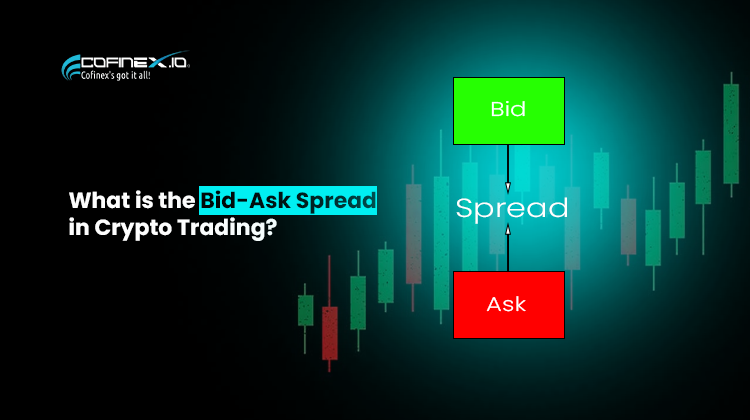
The bid-ask spread is the difference between the highest displayed buying price and the lowest displayed selling price for an asset.
- Bid price: The highest price a buyer currently offers.
- Ask price: The lowest price a seller currently requests.
- Bid-ask spread: The difference between the ask price and the bid price.
For example, suppose a crypto trading pair displays the following prices:
- Bid price: ₹99,900
- Ask price: ₹100,000
The spread is ₹100.
This means the lowest displayed selling price is ₹100 higher than the highest displayed buying price.
However, these prices can change as traders place, modify, or cancel orders.
How Do You Calculate the Bid-Ask Spread?
You can calculate the bid-ask spread using a simple formula:
Bid-ask spread = Ask price − Bid price
For example, imagine the BTC/INR market shows these prices:
| Detail | Price |
|---|---|
| Highest bid | ₹90,00,000 |
| Lowest ask | ₹90,10,000 |
| Bid-ask spread | ₹10,000 |
To calculate the spread, subtract the bid price from the ask price.
₹90,10,000 − ₹90,00,000 = ₹10,000
Therefore, the bid-ask spread is ₹10,000 per BTC at those displayed prices.
What Is the Spread Percentage?
Traders can also express the spread as a percentage to compare markets with different prices.
A common calculation uses the midpoint between the bid and ask:
Spread percentage = (Spread ÷ Midpoint) × 100
In the example above, the midpoint is ₹90,05,000.
The spread percentage is approximately 0.0111%.
This percentage helps you compare the spread relative to the asset’s price. However, it does not include other trading costs, such as exchange fees or slippage.
Why Does the Bid-Ask Spread Matter?
The bid-ask spread matters because it can affect the price at which you buy or sell an asset.
1. It Affects Trading Costs
Suppose you buy an asset at the lowest ask price and immediately sell it at the highest bid price. If the displayed prices remain unchanged, you would receive less than you paid.
The difference reflects the spread’s immediate impact, excluding trading fees and other costs.
Therefore, traders should consider the spread when estimating the cost of entering and exiting a position.
2. It Provides Clues About Liquidity
A narrow spread often indicates that buyers and sellers are competing closely on price. This situation commonly occurs in markets with strong liquidity.
On the other hand, a wide spread may indicate limited liquidity, greater uncertainty, or less competition between buyers and sellers.
However, the spread alone cannot tell you everything about a market’s liquidity. You should also consider order-book depth and available quantities.
3. It Matters for Frequent Traders
Frequent traders may pay more attention to the bid-ask spread because they enter and exit positions more often.
Even a small spread can affect their overall trading costs when they execute many trades.
Consequently, comparing spreads across trading pairs may help traders understand the costs associated with different markets.
What Causes the Bid-Ask Spread to Change?
The bid-ask spread does not remain fixed. Several factors can influence it.
1. Market Liquidity
When a market has many active buyers and sellers, their orders may sit closer together. As a result, the spread may become narrower.
In less liquid markets, buyers and sellers may place orders farther apart, creating a wider spread.
2. Market Volatility
During rapid price movements, traders may change or cancel orders quickly.
Consequently, the gap between the highest bid and lowest ask may widen or fluctuate as market participants respond to changing conditions.
3. Trading Volume and Activity
Higher trading activity can attract more competing orders. However, high trading volume does not always guarantee a narrow spread.
For this reason, traders should examine the actual bid and ask prices rather than relying on volume alone.
4. Order Size and Market Depth
The best bid and ask show prices for available quantities, not unlimited amounts.
A large order may consume several price levels in the order book. Therefore, the final execution price may differ from the best displayed price, even when the initial spread looks narrow.
Bid-Ask Spread vs Slippage
Although the bid-ask spread and slippage both affect trading costs, they describe different things.
| Feature | Bid-Ask Spread | Slippage |
|---|---|---|
| Meaning | Difference between the best displayed ask and bid | Difference between the expected and actual execution price |
| Main cause | Gap between buyers’ and sellers’ prices | Price movement and available liquidity during execution |
| When it matters | When evaluating displayed market prices | When evaluating the actual result of an order |
| Can it change? | Yes, as the order book changes | Yes, depending on market conditions and execution |
For example, the spread may be narrow when you place an order. However, if the market moves quickly or your order consumes multiple price levels, you may still experience slippage.
Therefore, understanding both concepts gives you a clearer picture of trading costs.
How Can Beginners Check the Bid-Ask Spread?
Before placing a trade, you can review a few details on your trading platform.
- Find the order book: Look for the list of current buy and sell orders.
- Identify the highest bid: This is the highest displayed buying price.
- Identify the lowest ask: This is the lowest displayed selling price.
- Calculate the difference: Subtract the bid from the ask.
- Compare the spread: Check how the spread changes over time or across trading pairs.
Additionally, review the quantities available at each price level. A narrow spread may not be enough to accommodate a large order.
Common Beginner Mistakes
Confusing the bid with the ask: The bid represents the highest displayed buying price, while the ask represents the lowest displayed selling price.
Assuming a narrow spread means zero costs: Trading fees and slippage can still affect your final result.
Ignoring order-book depth: The displayed best prices may apply to only a small quantity.
Assuming high volume always means a narrow spread: Actual market conditions determine the spread.
Forgetting that prices change: The bid and ask can move quickly, particularly during volatile markets.
FAQs
What is the bid-ask spread in simple words?
It is the difference between the highest displayed buying price and the lowest displayed selling price for an asset.
Is a lower bid-ask spread better?
A lower spread generally reduces the gap between the best displayed buying and selling prices. However, you should also consider order-book depth, trading fees, and potential slippage.
What does a wide bid-ask spread mean?
A wide spread may indicate limited liquidity, greater uncertainty, or less competition between buyers and sellers. However, the spread can widen for several reasons.
Do I pay the bid-ask spread as a separate fee?
Usually, the spread is not a separate fee charged by the exchange. Instead, it represents the difference between displayed buying and selling prices. However, it can affect the price you receive when trading.
Is the bid-ask spread the same as slippage?
No. The spread measures the gap between the best displayed bid and ask. Slippage measures the difference between an expected price and the actual execution price.
Disclaimer
This article is for educational purposes only and does not provide financial or investment advice. Cryptocurrency markets can change rapidly, and spreads, liquidity, fees, and execution prices vary by platform and market conditions.